


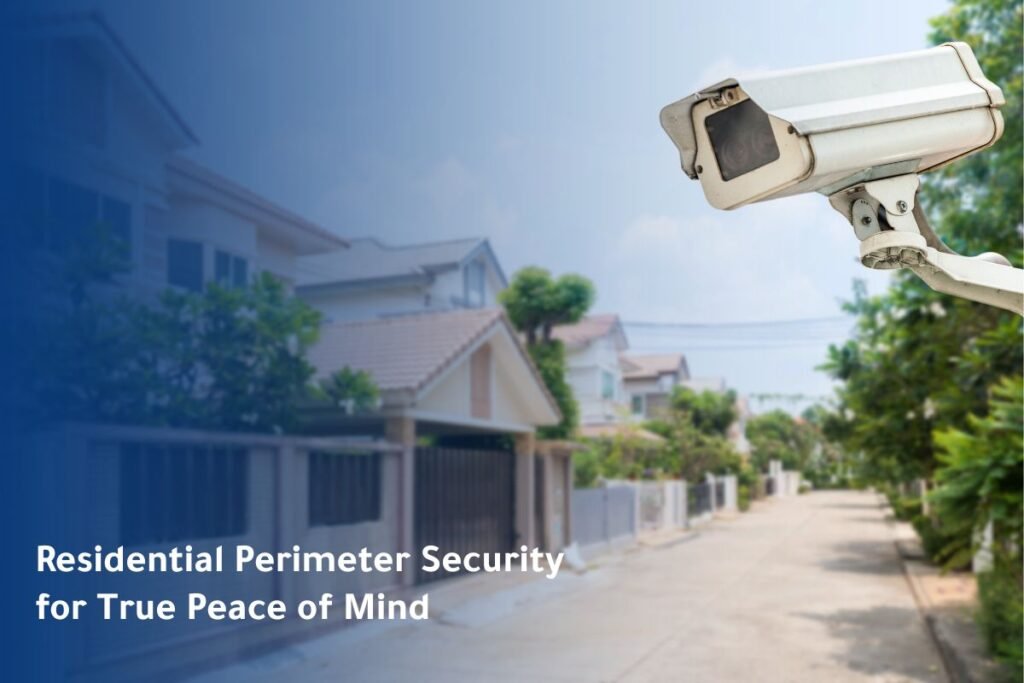
A safe home does not begin at the front door. It begins at the edge of the property, near the gate, the side wall, the parking ramp, and the back lane. That is the real point of residential perimeter security. It gives a home or housing society an early warning, not a late reaction.
For a family, peace of mind is not a complex technical topic. It is the comfort of knowing the gate is watched, visitors are tracked, the parking area is visible, and unusual activity does not go unnoticed. That is what residents value most.
Why Residential Security Needs More Than Locks and Gates
A modern residential property experiences excessive movement. Delivery partners come and go. Drivers wait near the gate. Domestic staff enter at different times. Guests arrive. Maintenance teams move around. Children play in common areas. Vehicles enter the basement. In the middle of all this, one missed detail can become a security concern.
That is why many residential communities now want a setup inspired by a smart city surveillance system, not in size, but in the way it connects cameras, access points, alerts, and monitoring into one coordinated safety layer.
The goal is not to make residents feel watched. It is to make the property more responsive to potential risks.
Key Areas to Cover in Residential Perimeter Security
Every property has its own weak spots. A villa will not need the same setup as a high-rise society. A farmhouse will not need the same layout as a compact apartment block.
Still, some places usually need attention:
- Main gate and exit gate
- Rear boundary wall
- Basement and open parking
- Service entry
- Lift lobby and staircase entry
- Visitor waiting zone
- Terrace access
- Clubhouse or common area
- Dark side passages
The trick is not to install cameras everywhere just for the sake of it. That often creates confusion and unnecessary expense. A better way is to ask a few basic questions. Where can someone enter unnoticed? Which area is poorly lit? Where do guards have limited visibility? Where has society had issues before?
Those answers usually show where security should begin.
Why CCTV Camera Quality Is Valuable to Residential Security
Blurred faces, dark visuals, broken recordings, and poor camera angles are common pitfalls in residential security systems. And a CCTV camera is helpful only when the footage is clear at the right moment. Most people realize this only after an incident occurs.
That is why many buyers prefer reliable and STQC-approved CCTV brands in India when planning residential surveillance. Better-tested equipment gives more confidence, especially in larger residential properties.
What To Check Before Installing Residential CCTV
For residential spaces, it is important to evaluate:
- Night vision performance
- Weather resistance for outdoor cameras
- Low-light coverage near gates and parking areas
- Backup power during outages
But even a good camera setup can fail if the placement is poor.
- Too high: faces may not be visible clearly
- Too low: cameras can be tampered with
- Poor lighting: weak night footage
- Bad storage: recordings may disappear before review
Maintenance also matters. A monthly check of camera angles, recording quality, backup systems, and night visibility can prevent larger issues later.
How Remote CCTV Monitoring Improves Residential Security
A guard cannot be near the gate, basement, back wall, and terrace at the same time. It is just reality.
This is where a remote CCTV monitoring system becomes useful. Trained monitoring teams can watch live or recorded footage and alert the on-site staff when something looks wrong. Late-night movement near a wall, someone entering a restricted area, camera tampering, or repeated suspicious activity can be spotted faster.
It helps especially in:
- Gated societies
- Villas
- Farmhouses
- Empty or rarely used homes
- Senior citizen residences
- Properties with more than one entry point
Remote monitoring does not replace guards. It gives them better eyes. A guard who receives a timely alert can respond quickly.
How a Cloud-Based Video Management System Helps Housing Societies
Local DVR rooms can be messy. Sometimes, the system is locked in one room, or only one person knows the password. Other times, footage is lost because the recorder failed. That can create security and accessibility issues.
A cloud-based video management system can make things easier for residential committees and facility managers.
Since footage can be accessed securely from authorized devices, it becomes easier to:
- Search old recordings faster
- Manage multiple camera locations from one dashboard
- Review footage during incidents
- Share only the required clip with security or management
It also helps during emergencies. Instead of waiting for someone to unlock the DVR room, the right person can quickly review gate activity, parking footage, or service-entry movement.
Of course, privacy has to be handled properly.
- Not every resident needs access to every camera
- Passwords should be strong
- Footage should not be shared casually on WhatsApp groups
- Surveillance should stay focused on shared and high-risk areas, not private residential spaces
Conclusion
Residential perimeter security works best when every layer plays its part well. The priority should be visibility near entrances, exits, and low-visibility areas. Access control should track who enters and exits. Remote monitoring should catch unusual activity on time. Cloud storage should make footage easy to review when needed.
When these parts are checked regularly and managed properly, a residential space becomes safer without feeling complicated or over-secured.
Security needs are different for every property. A villa, gated society, or independent home will all have different weak spots. At Intellve, we help homes and residential communities identify vulnerable areas, improve monitoring across key access points, and build security systems that are practical for everyday living.
Connect with our team to plan a setup that fits your property.