


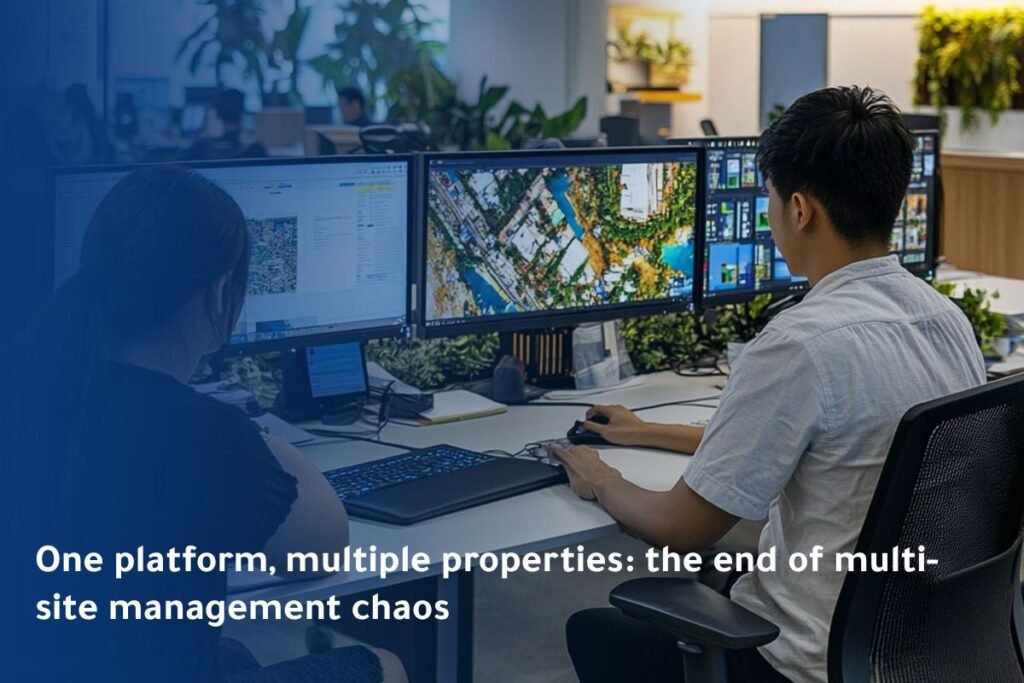
Managing one property is work. Managing five, ten, or twenty is a different kind of challenge altogether.
At that point, the problem is usually not whether cameras are installed. Most sites already have some kind of setup in place. The real problem is what happens after that. Different locations run on different systems. Alerts come from different places. Someone logs in here, switches screens there, calls one guard, messages another team, and then tries to piece together what is happening without losing time.
That is where the chaos starts. Most businesses think they have a surveillance setup when what they really have is a scattered collection of devices. There may be cameras across properties, yes, but without one clear system tying them together, the whole thing becomes harder to manage than it should be. That is why more businesses are now looking at multi-site monitoring more seriously. Not as a nice extra, but as something they genuinely need.
Why Multi-Property Security Gets Messy So Fast
The bigger the footprint, the harder it becomes to keep things consistent. A warehouse may have one monitoring process. A retail outlet may have another. A branch office may be using entirely different hardware. Then add timing issues, local staff differences, and varying risk levels, and suddenly even basic oversight starts feeling disjointed.
The issue is not always camera quality. Often, it is the lack of a unified platform.
Without a single view, teams end up reacting site by site rather than properly managing the whole network. That slows response times, reduces visibility, and puts too much pressure on manual coordination. For companies handling several properties at once, that is exactly where operations begin to feel chaotic.
One Platform Changes the Way Teams Work
This is where a central platform starts making a real difference. Instead of checking each property separately, teams can work through a single system that brings everything together. That means fewer logins, fewer disconnected dashboards, and much less back-and-forth between teams just to understand what is happening.
A proper multi-camera monitoring system does more than show several feeds on one screen. It helps teams better organize locations, prioritize alerts faster, and move from confusion to action with less delay.
That matters because in multi-property environments, speed is often lost in handovers, not in the event itself.
Visibility Matters More Than Volume
Many organizations add more cameras when the real problem is not coverage. It is visibility.
You can have dozens of cameras across multiple sites and still struggle to manage them well if the information arrives in a fragmented way. More devices do not automatically create more control. Sometimes they just create more noise.
That is why businesses start valuing platforms that support CCTV monitoring solutions in a more organized way. The point is not just to watch more screens. The point is to make the monitoring process easier to understand, act on, and scale.
When everything is pulled into one system, teams stop spending so much time trying to find clarity.
Better Coordination Across Locations
Another major benefit of a unified platform is consistency. When each site is being handled differently, standards slip. One team escalates fast. Another waits. One location stores footage properly while another struggles. One site reports issues clearly. Another misses details. Over time, that inconsistency becomes a real operational problem.
A more centralized setup helps create stronger habits across properties. Teams can work with shared processes, shared visibility, and a clearer chain of response. That is especially useful for organizations managing stores, warehouses, campuses, offices, or remote sites at the same time.
This is where multi-site video surveillance systems start becoming less about technology and more about control.
Less Confusion, Better Response
The biggest improvement usually shows up in response quality. When one platform connects multiple properties, teams do not waste as much time figuring out where the issue is, who is responsible, or how to access the feed. They can move faster because the system feels more connected from the beginning.
That does not remove every challenge, of course. Multi-site security will always involve coordination. But it does remove much of the unnecessary mess caused by disconnected tools and scattered oversight.
And honestly, that alone can change how manageable the whole operation feels.
Conclusion
The chaos in multi-property management usually does not come from having too many locations. It comes from trying to manage them through too many disconnected systems.
A single platform brings structure back into the process. It helps teams monitor more effectively, respond faster, and maintain clearer control over multiple properties without turning every incident into a coordination exercise.
For organizations trying to simplify multi-site surveillance, Intellve can be worth exploring as part of that shift. It brings multiple locations into one more manageable monitoring environment, so teams are not constantly switching between systems. With clearer visibility across properties, response and coordination become faster and more consistent.