


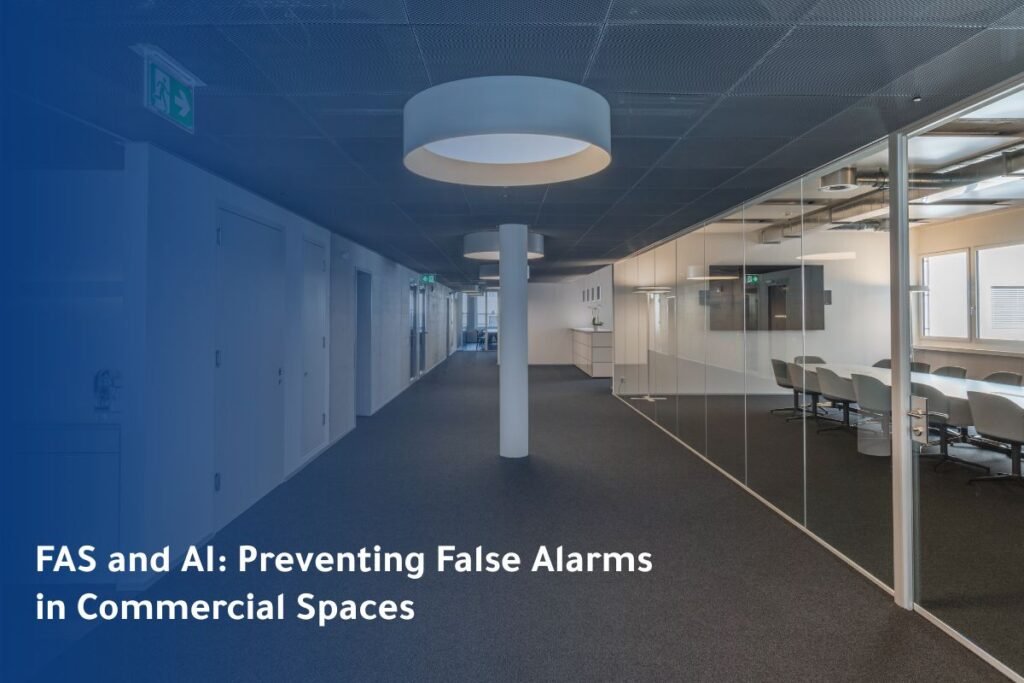
A false alarm often starts with a system detecting something without fully understanding what caused it. A camera may pick up movement near a gate, but movement alone does not explain much. It could be a person, a shadow shifting under headlights, a stray animal, or even a loose sheet moving in strong wind. Fire sensors face a similar problem. Dust, steam, smoke, and machine exhaust can sometimes look surprisingly similar to a basic system reacting only to airborne particles.
This is why many facility teams ask, “How does AI prevent false alarms?” A normal system may detect something, but it may not understand what it is seeing. That is where AI becomes useful.
It does not work like a simple on-off switch. AI studies patterns. It can compare movement, timing, location, access activity, sensor readings, and past events before pushing an alert forward.
So, if movement happens near a warehouse gate at midnight, the system does not have to treat it as suspicious immediately. It can check whether a delivery was scheduled, whether an approved entry happened, and whether the same pattern has occurred before. That context helps teams respond more accurately.
How AI Improves Fire and Security Alert Accuracy
AI can evaluate several signals together instead of reacting to one trigger alone. For example, if a fire sensor triggers in a production area, AI can compare it with:
-
- Temperature rise
-
- Camera visibility
-
- Air quality
-
- Time of day
-
- Known machine activity
If only one weak signal appears, the system may mark it for verification. If several signs point to danger, the alert can be escalated faster.
This makes the response more practical. Not every alert needs panic. Some need checking or a guard visit. Some need immediate evacuation or emergency action.
That difference matters in commercial spaces where one unnecessary shutdown can disturb daily operations.
How AI Reduces False Positives in Security Monitoring
Security teams are not short of alerts. They are short of useful alerts.
A large commercial property can experience constant activity throughout the day. But should everything be treated like a serious incident? No.
This is where how AI reduces false positives in security alerts becomes important. AI can learn what usually happens on a site and what looks out of place. It can separate normal activity from activity that deserves attention.
For instance, a cleaner walking through a lobby at 7 P.M. may be normal. The same movement inside a locked server room at 2 a.m. is different. A truck waiting near a loading dock during dispatch hours is expected. The same truck standing there after closing may need review.
AI does not replace the human team. It simply helps them save time they might waste on harmless triggers.
Remote Monitoring Across More Than One Site
Many businesses do not operate from one building anymore. One company may have a head office, two warehouses, three retail units, and a logistics yard. Each place has its own risks. Watching everything separately can become confusing very quickly.
That is why managers often search for how to monitor multiple commercial sites remotely. A central AI-supported monitoring setup can bring camera feeds, access logs, fire alerts, incident updates, and site activity into one place.
This helps a control team see what is happening across locations without calling each site again and again. If two alerts come at the same time, the system can help show which one looks more urgent. If one branch has repeated false alarms from the same zone, the team can identify that pattern and fix the cause.
Remote monitoring should not mean simply staring at more screens. It should mean getting clearer information from all sites without drowning in noise.
Why AI-Based Alert Management Matters for Logistics Operations
Commercial safety does not stop at the building gate. For many businesses, trucks, drivers, routes, and loading points are part of the same risk picture.
A truck that stops in the wrong area for too long may need attention. A driver taking an unusual route may require a quick check. A delay at a warehouse gate can affect dispatch, staffing, and security preparations. This is where commercial trucking real-time risk management becomes important.
For logistics-heavy businesses, this can be extremely useful. A camera alert at a warehouse and an unusual vehicle stop may not mean much separately. Viewed together, those signals may point to a larger operational risk.
AI Still Needs Human Judgement
There is one thing businesses should be clear about. AI should be treated as a support system, not a replacement for trained teams.
It is a support layer. It can filter repeated alerts, spot unusual patterns, compare signals, and bring useful details to the screen. But people still matter. A trained operator must review serious alerts. Site teams must respond physically. Managers must decide what action makes sense. Emergency services must be called when needed.
The goal is not to remove people from the process. The goal is to stop people from being buried under weak, repeated, badly timed alerts.
Conclusion
False alarms can quietly damage a security system because they reduce trust in the alerts. Commercial spaces cannot afford that. A better system should help teams know what needs checking, what needs action, and what can be safely filtered.
AI does this by contextualizing fire alarms, security warnings, remote site monitoring, and transport-related concerns. This gives teams greater confidence to respond instead of just reacting to every low-priority trigger the same way.
Intellve works with companies that seek smarter, cleaner, and more reliable monitoring across their commercial environments. If you want to eliminate false alerts and improve day-to-day reaction, we can help you take the next realistic step.