
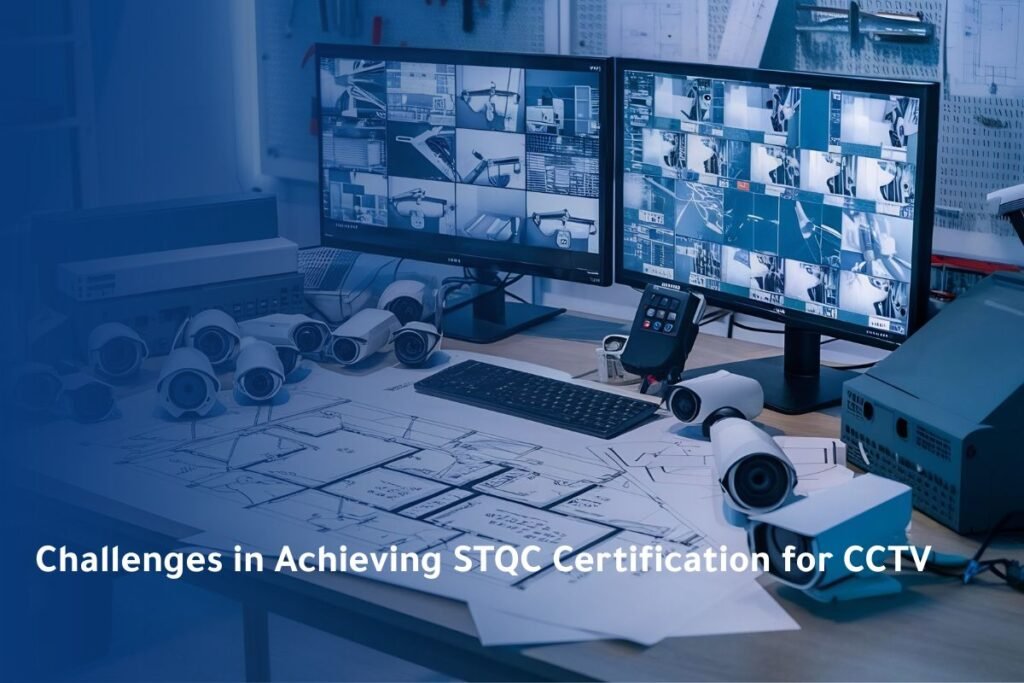
From the outside, certification often looks easier than it really is. A CCTV brand is tested, a certificate is listed in the brochure, and buyers assume the process is fairly simple. But anyone close to product compliance knows that is not how it usually goes.
In practice, STQC certification for CCTV can be a slow, detailed, and sometimes frustrating journey. It is not just about whether a camera records properly. It is about whether the product, its documentation, its security features, and its overall technical setup are all strong enough to meet formal requirements without gaps.
That is where the real challenge begins. Many companies enter the process thinking they are mostly ready, only to realize that being market-ready and certification-ready are not the same thing at all.
The Product May Work Fine, but That Is Not Always Enough
One of the biggest misunderstandings is assuming that a product that sells well will automatically qualify without much difficulty.
That may seem reasonable at first. If the camera works well, takes good pictures, and meets the buyer’s needs, why is certification so hard? The answer is simple. Certification looks deeper than general performance. It draws attention to technical discipline, consistency, and whether the product was developed with compliance in mind from the beginning.
That is why entering the STQC-approved CCTV space can be harder than some manufacturers expect. A camera may be good enough for the market and still fall short when its design, controls, or technical details are examined more closely. If small shortcuts were taken early in development, this is usually the stage when they start showing up.
Documentation Has a Way of Becoming a Real Problem
Sometimes the biggest delay is not the hardware. It is the paperwork around it. A company may know its product inside out, but that does not help much if the records are incomplete, inconsistent, or poorly organized. Specifications may differ from one file to another. Version details may be unclear. Supporting documents may exist, but not in a way that makes the process smooth.
And certification does not move on confidence. It moves on clarity.
That is why documentation becomes such a common stumbling block. The product team may believe everything is under control, but if the paperwork does not reflect that properly, the whole process can start slowing down. For many businesses, this turns out to be more painful than expected because the issue is not apparent until the formal review begins.
Security Standards Raise the Difficulty Further
Then comes the security side, which is where things get even more serious. A few years ago, buyers often focused on image quality, storage, or price. Now the conversation is wider. People want to know whether the camera system is secure, whether it is vulnerable to weaknesses, and whether it can be trusted in more sensitive use cases. That shift has made certification more important, but also harder.
It is one reason buyers are increasingly looking at STQC-certified CCTV camera brands in India. The term suggests that the product has undergone a more formal and rigorous compliance process. For manufacturers, though, that means the standard is no longer basic. Security cannot be treated like a secondary feature added at the end. It has to be handled properly from the start, and that takes time, care, and stronger internal processes.
Timelines Rarely Move as Smoothly as Teams Hope
Even when a company is genuinely trying to do things the right way, timelines can stretch. That can happen for many reasons. Testing takes time. Clarifications come up. Issues that seem minor often turn out to be more significant. A change is required. Another round of review follows. The business side may be ready to launch, but the certification side may still be catching up.
That gap creates real pressure. Sales teams want answers. Procurement timelines may already be moving. Product teams may be dealing with revisions they did not fully expect. And suddenly, the process feels heavier than it looked in the beginning. This is why certification often becomes stressful, even for companies that entered it with decent preparation.
Product Changes Can Complicate Everything Again
There is also the issue of change over time. CCTV products do not always stay fixed. Components may be replaced. Firmware may be updated. Suppliers may shift. Small technical changes may happen for perfectly normal business reasons. But from a compliance point of view, those changes can create new complications.
That is why an STQC certificate CCTV claim cannot be treated like a one-time marketing sentence that stays simple forever. Maintaining confidence in the product becomes harder as it continues to evolve beneath the surface. Companies need to be more careful than they sometimes realize, because even routine updates can create compliance implications over time.
Certification Alone Does Not Fix Weak Surveillance Operations
It is also important to note that just because a camera is certified doesn’t mean it will automatically make a good surveillance system. In other words, device compliance is important, but it’s not the only thing that matters. A camera might meet the requirement, but still be part of an inefficient way of doing things.
That is why many organizations now look beyond the camera itself and focus more on how surveillance is managed day-to-day. The hardware matters, yes, but so do the software layer, analytics, centralized oversight, and the ability to respond in a practical way.
How Intellve Supports Smarter Surveillance Systems
At Intellve, we understand that certification is only one part of building a reliable surveillance environment. Real-world performance depends on how well systems are connected, monitored, and managed over time.
Most teams already have the pieces in place. The real shift happens when those pieces start working together—when video, alerts, and operational data come into one clear, usable view instead of sitting in silos.
If the goal is to move beyond basic compliance and build a system that actually supports day-to-day decision-making, Intellve helps turn that into something practical, not theoretical.